
Is this a scam? Run a quick check.
Free. No sign up required.
Paste text, upload an image, or tell us the situation.
By sending, you accept the privacy policy.
Nothing on hand? Try:
HOW IT WORKS
A free scam check, whenever you need a second opinion
- 1
Submit a suspicious message
Paste text, upload an image, or describe what happened.
- 2
Owly Check looks for scam signals
We analyze wording, context and suspicious details - not just blacklists.
- 3
Get a fast, clear answer and next steps
Risk level, a short explanation, and what to do - within seconds.
High scam risk
Risk level: high
This message is a classic phishing attempt. Banks in Israel will never ask a customer for their personal code, their password, or the verification code (OTP) sent by SMS in order to "identify" you. The moment you hand over the code, the scammer can take over your bank account and move money without you knowing.
Suspicious signs:
- A demand for a personal code or a verification code
- An unsolicited request for sensitive information
- Creating urgency, or posing as an official authority without a full identification
Hang up right away, or delete the message. Don't share any code or personal detail. If you're unsure, call the bank yourself on the official number on the bank's website or on the back of your card.
Want always-on help?
Turn on Owly on WhatsApp - forward anything suspicious and get an answer in text and voice.
Frequently Asked Questions
WhatsApp personal assistant
Don't face the next
message alone
Owly on WhatsApp takes the messages you forward, replies in writing and by voice, and updates a trusted contact when there's risk. Speaks four languages: Hebrew, English, Arabic, and Russian.
Let's protect you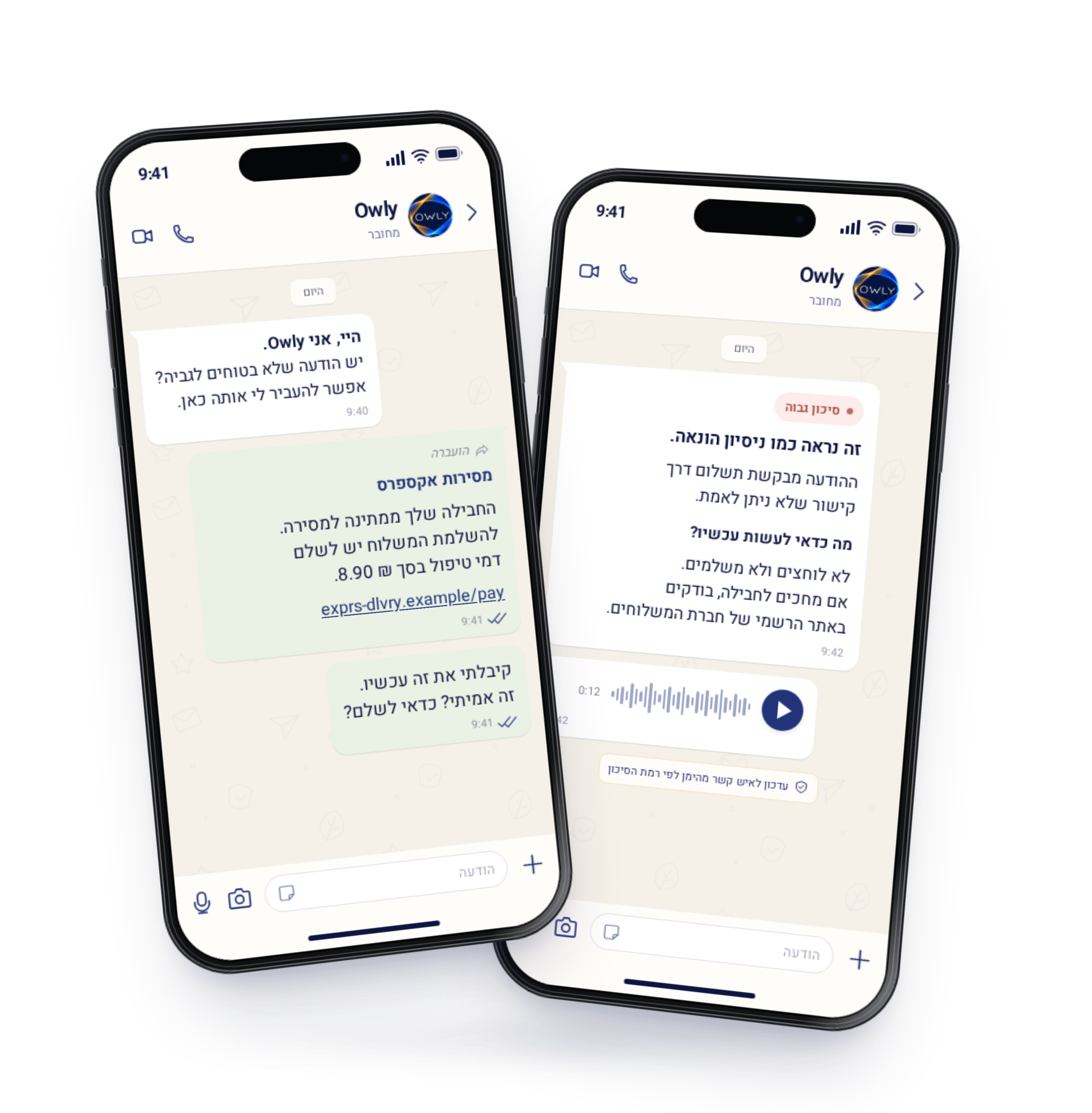
Scams are evolving. Your protection should too.
Today's scams look like a bank, like a delivery notice, like a family member. We built Owly so anyone can get a clear answer within seconds - without unnecessary fear and without feeling alone.
Owly Check is the first step: a free tool for anyone who feels something is off.